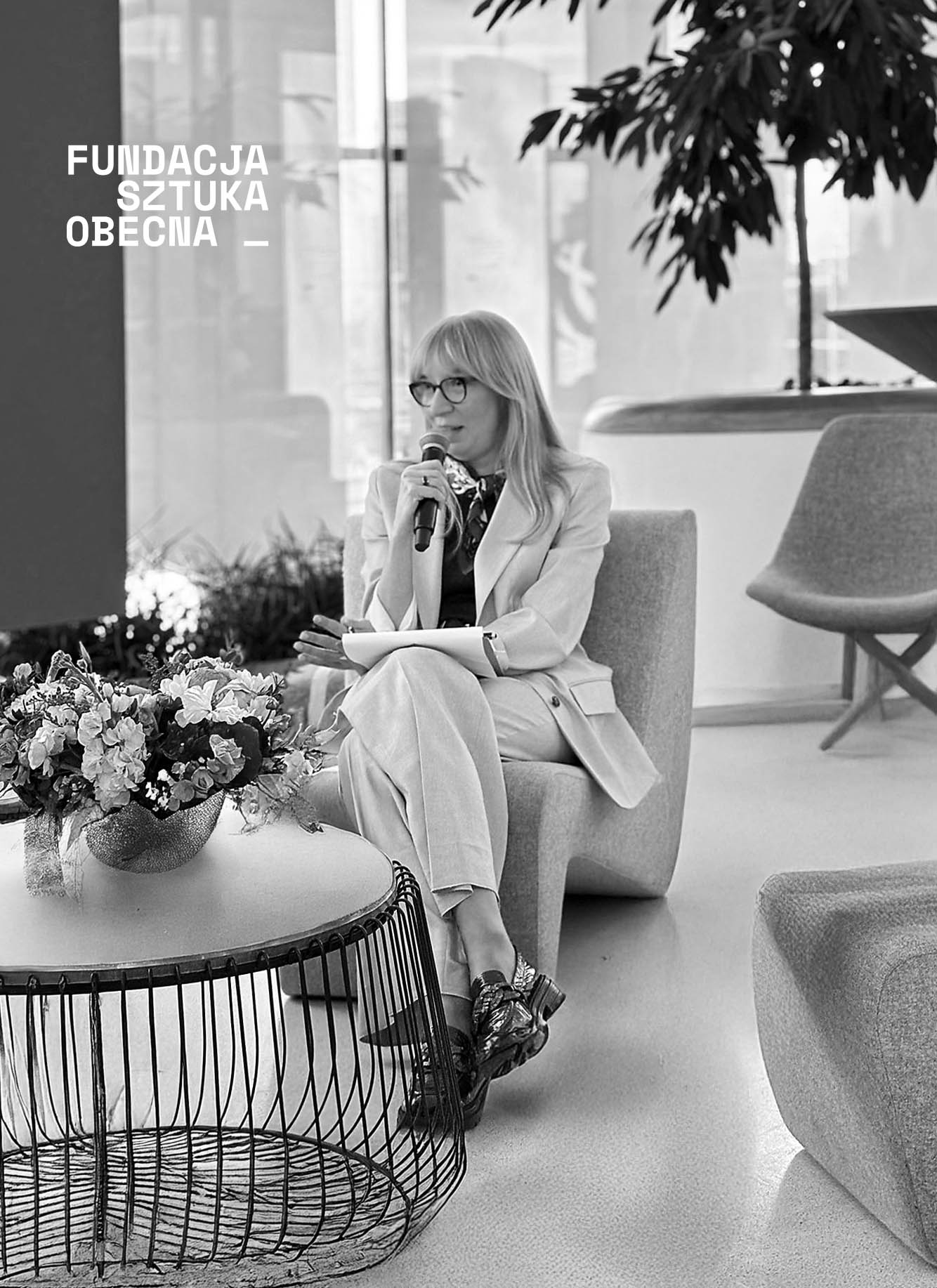
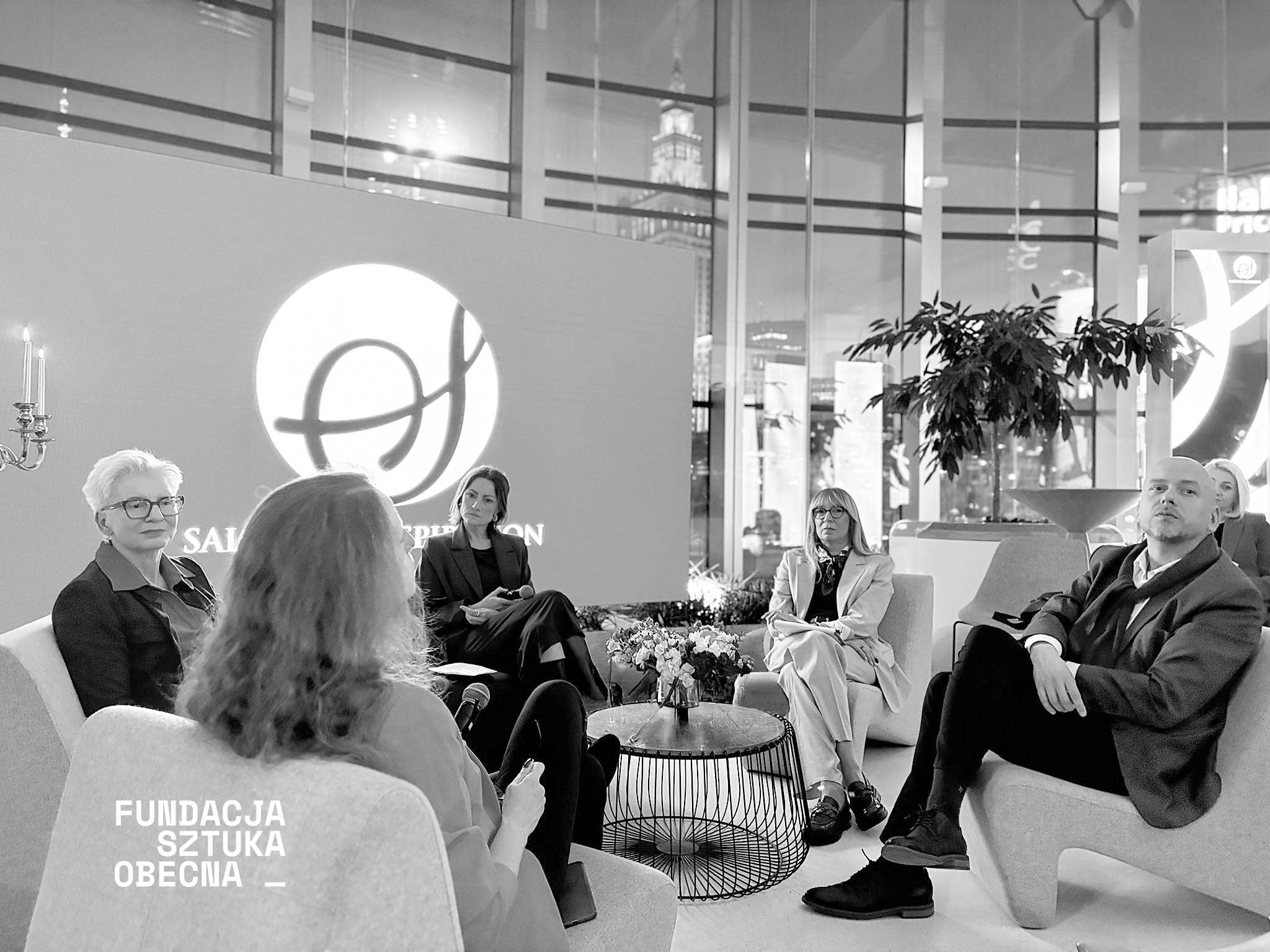
We are publishing an original article written to mark Iwona Pokrowska’s participation in the 35th Salon of Inspiration, dedicated to the theme of ‘Presence’. It expands on the idea with which the Sztuka Obecna Foundation enters this conversation: art as a space for mindfulness, meaning and a deeper understanding of humanity.
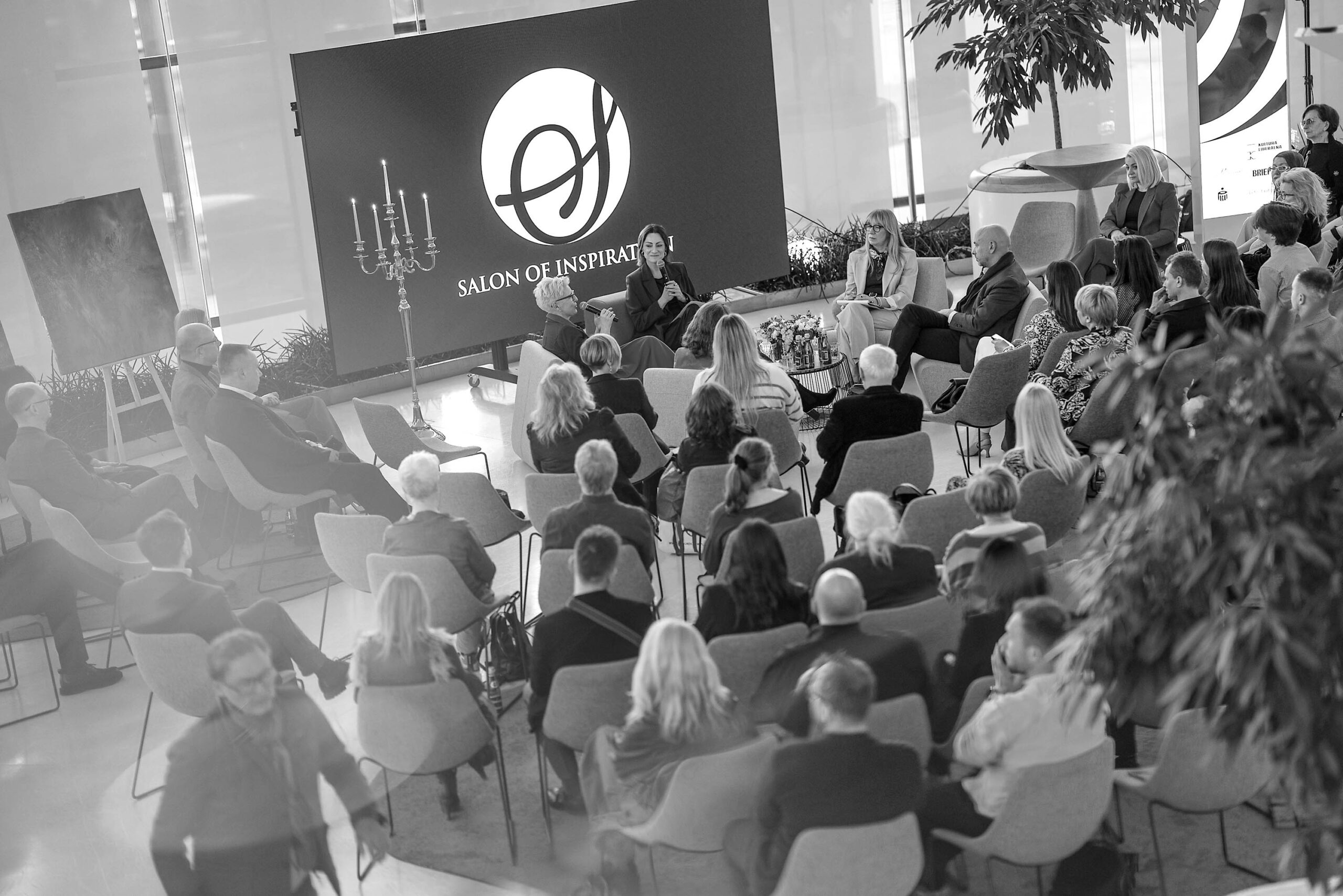
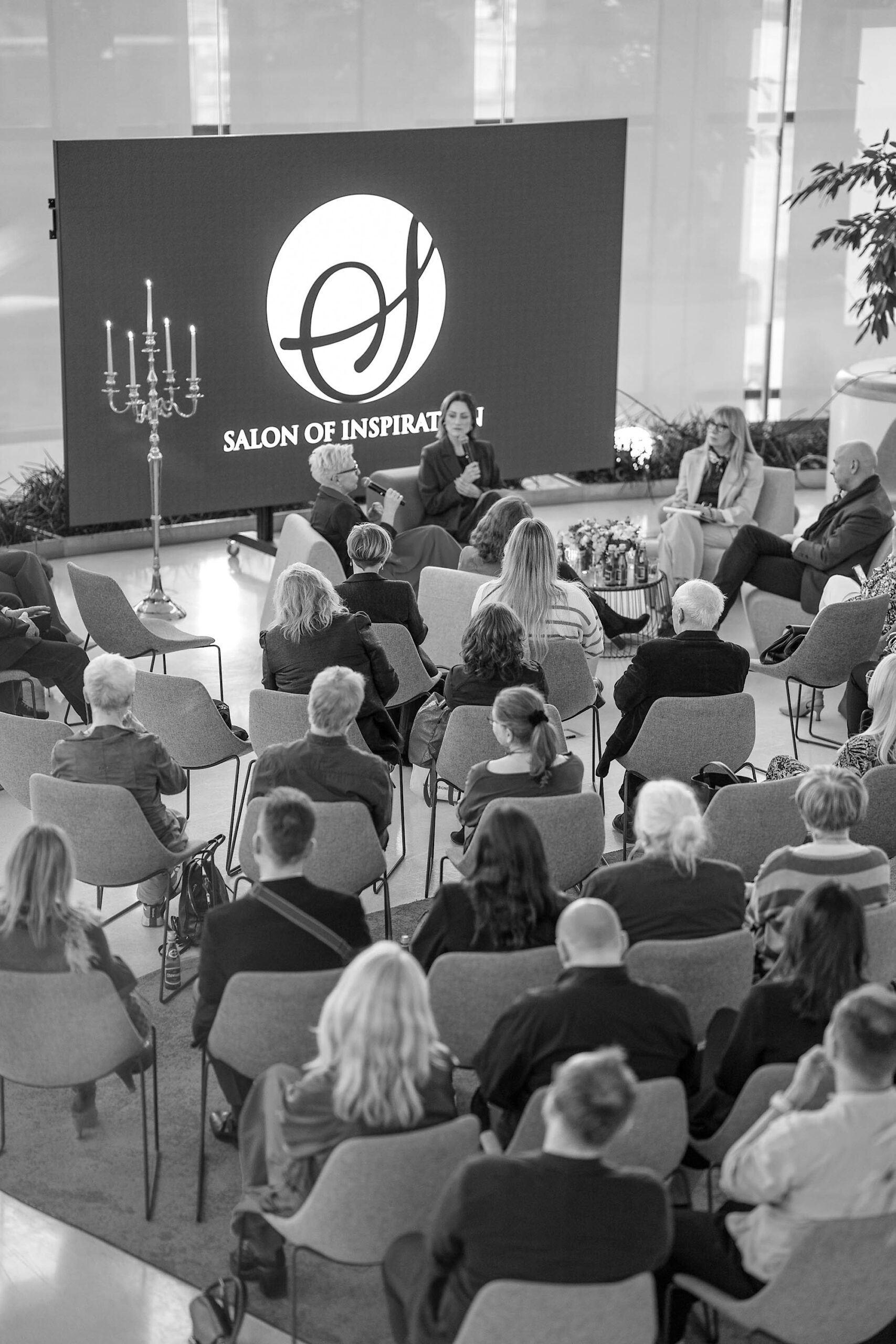
35th Salon of Inspiration
22 April 2026
PKO BP Rotunda, Warsaw
There are things that one understands most fully not when one can define them precisely, but when one truly experiences them. Guilt, fear, loss, the longing for meaning, the experience of closeness, the need for light and inner order — all these belong to the realm of existential knowledge, not merely intellectual knowledge. This is precisely why art remains so important. Not because it provides ready-made answers, but because it allows us to draw closer to that which we cannot express in ordinary, simple language, without thereby flattening its meaning.
The modern world places a high value on what is measurable. It teaches us about efficiency, analysis, procedures, risk planning, process management and goal-setting. All of this is necessary. And yet human life — just like the life of an organisation — does not consist solely of what is quantifiable. At its heart lie relationships, responsibility, attention, the ability to listen, a willingness to understand others, but also the need for silence, breathing space and meaning. Art is one of those areas that reminds us that human beings do not live solely in a world of functions and results. They also live in a world of meaning.
That is why presence is neither a vague nor a mere ornamental concept. It does not simply mean being physically present. It refers to the quality of one’s attention. It is the ability to pause and reflect on another person and on the world itself. It means accepting that not everything that matters can be immediately organised and explained.
In this sense, art and philosophy are deeply intertwined: both teach us that human experience requires not only knowledge, but also imagination, sensitivity and patience in the face of complexity.
Great literature and great painting are able to make difficult things accessible not by simplifying them, but by giving them a form that a person can bear. In Mikhail Bulgakov’s “The Master and Margarita”, one of the most intriguing scenes takes place when the devil — Woland — converses with modern people, convinced of the power of reason, ideology and intellectual order. Right in the middle of this conversation, Kant reappears. A grotesque remark is made: ‘Throw that Kant into Solovki for three years!’. This scene is so powerful precisely because it is both absurd and profoundly true. After all, the conversation takes place nearly a century after the philosopher’s death, and yet his ideas still provoke resistance, irritation and a desire to invalidate them. Here, literature does something exceptional: it does not merely recount a philosophical dispute, but restores to it the heat of life. It ensures that questions of good and evil, reason, pride, freedom, responsibility and the limits of human certainty cease to be abstract. They become an experience.
This is one of the most important functions of art: to breathe life back into what all too easily becomes a lifeless system of concepts. It is not, then, that art replaces philosophy. It is that it allows a person to engage with philosophical questions with their whole being — not just with their intellect, but also with their imagination, emotions and intuition. Thanks to this, they become closer, more human, more real.
Vermeer offers a different kind of experience. In *View of Delft*, there is no drama or narrative. There is light, water, sky, the city, and an extraordinary focus of the gaze. This painting was created a few years after the catastrophic explosion of the gunpowder store in Delft, which destroyed part of the city. Vermeer, however, does not paint the ruins or the event itself. He paints a city that endures, that breathes, that is regaining its order in the light. And perhaps that is precisely why this painting is so deeply moving. It does not deny the fragility of the world, but it does not dwell on it. It shows that art can also restore breath, order and a sense of continuity. It can be a form of focused salvation.
In *View of Delft*, tranquillity is not emptiness. It is a tranquillity built on mindfulness. On proportion, silence, and the discreet presence of humanity in the face of the greater order of the world. Such painting does not turn one away from reality. On the contrary — it brings it closer in a more complete way, for it allows us to see what remains invisible in the daily rush: rhythm, light, duration, harmony. In times of sensory overload and information overload, this reminder seems particularly valuable.
Agnes Martin, on the other hand, shows that art can be even quieter, almost silent. Her painting is understated, subtle, built on rhythm, delicate lines and muted colours. And yet it is difficult to regard it as cold or purely formal. On the contrary — there is a deep focus, gentleness and a kind of inner order that does not impose itself on the viewer, but invites them to slow down. Martin reminds us that presence does not always mean intensity or drama. Sometimes it means silence, which allows us to return to ourselves and to the world without haste.
This is particularly important today, when so many aspects of life — including our professional lives — are subject to ever-increasing pressure. Our attention becomes scattered, relationships superficial, and language is increasingly subordinated to function, brevity and efficiency. Art does not offer a simple solution to these problems. But it can create conditions in which people regain the ability to see, listen and feel more consciously. It can remind us that a full life consists not only of reactions, but also of contemplation. Not only of action, but also of presence.
That is why the question of art in organisations should not be solely about aesthetics. It should be a question about people. About the image of the human being that the organisation embraces, reinforces and protects. Does it see in them only a function, a skill, a role, a resource? Can it also recognise their fragility, imagination, need for meaning, need for recognition and inner space? An organisation without contact with art risks not only aesthetic barrenness. It risks narrowing its language, imagination and the very image of the human being.
From this perspective, art is not merely an add-on to social or professional life. It is one of the languages of presence. It teaches us to see more fully, to listen more attentively, and to think less superficially. It helps to preserve a sense of connection where things can easily become mechanical, and to maintain meaning where everything is all too easily reduced to efficiency. This is not an argument against professionalism, strategy or responsibility. On the contrary — it is an attempt to deepen them. Art does not replace procedures, but it can remind us why procedures exist. It does not replace management, but it can ensure that management does not become blind to the human element.
At the Sztuka Obecna Foundation, this is precisely how we understand the role of art. Not as a festive accessory or a closed-off world, but as a living language of presence — in the social sphere, in everyday experience, in relationships, in memory, and in the way we view one another. We are interested in art that is not separated from life, but returns to it in a meaningful way. Art that helps us see more, feel more fully and be more mindful.
Presence is one of the most precious values today. In a world of information overload and a scarcity of meaning, in a world of communication and yet profound loneliness, art can become a space for regaining attention, meaning and connection. It does not make difficult issues go away. It does not offer simple consolations. But it allows us to rise above them — and sometimes it also restores the light. And that is precisely why it remains so necessary.
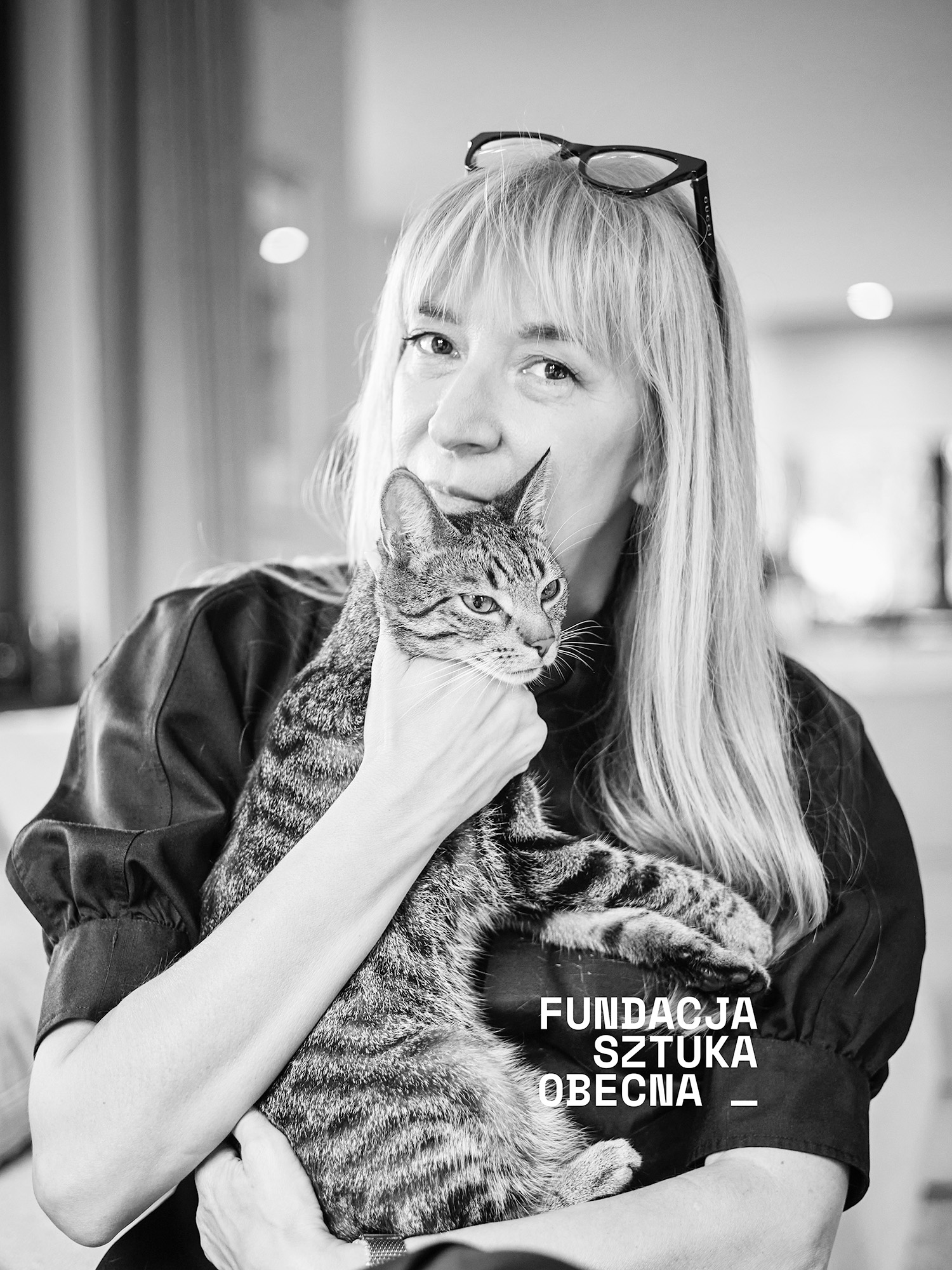
Iwona Pokrowska
foundation board member
A passionate lover of art, photography, and literature. She loves traveling, which inspires her to meet new people and learn about different cultures. She is guided by empathy and responsibility in her life—she cares deeply about the fate of people and animals. She constantly works on her personal development and eagerly discovers the world around her. A mathematics graduate with experience in management, development strategy, and relations with the insurance market. She values professionalism, continuous development, and an ethical approach to business.